
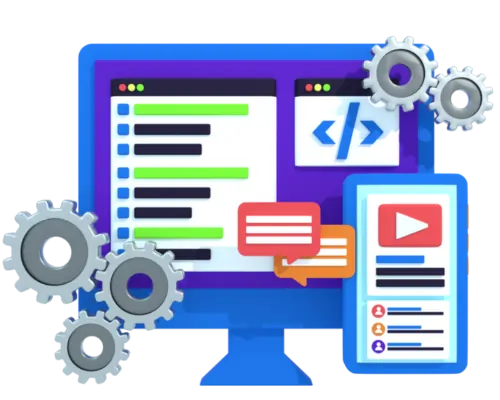
Apphouse Infotech defines custom software development (CSD) services as those that develop software in rapid increments and iterate custom applications and software products to meet an organization’s unique business needs.
CSD services entail gathering business requirements and coding applications from inception, building applications on a platform as a service (PaaS), or assembling applications from existing web services or other reusable pieces of code. Services marketed as “software product engineering” or “digital product development” are likely to be examples of the category Apphouse Infotech defines as CSD services.
With our vast expertise in custom enterprise software development, we equip large organizations with powerful and scalable solutions designed to address key challenges in workflow automation — from strategic planning to enhancing productivity.
Explore the digital landscape with our enterprise software solutions company and propel your business toward long-term success!
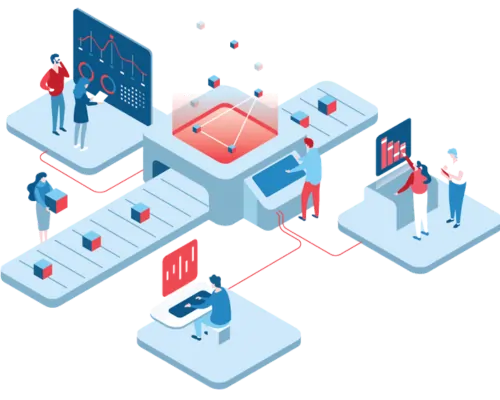

Product Development involves the journey of turning an initial concept into a fully functional and marketable product by progressing through multiple phases such as research, design, prototyping, evaluation, and manufacturing. The process starts by recognizing a customer need or identifying a gap in the market, followed by brainstorming, conceptualizing, and crafting creative solutions.
Once the idea is formulated, prototypes are created and assessed to enhance functionality, user experience, and overall performance. Insights gathered from testing guide refinements before transitioning to large-scale production. Successful product development requires seamless collaboration between diverse teams, including design, engineering, marketing, and quality control, to ensure the final product aligns with customer demands and business goals.
Software Support & Maintenance involves keeping a software application operational, secure, and up-to-date after its initial release. This process includes diagnosing and fixing errors, enhancing performance, and addressing user feedback to ensure a smooth experience. Regular updates and patches are applied to strengthen security, introduce enhancements, and optimize system efficiency.
Additionally, maintenance tasks may involve making adjustments to adapt to changing technologies and taking preventive measures to avoid potential issues. Successful software support requires ongoing monitoring, prompt issue resolution, and proactive management to ensure the software continues to meet business objectives and user expectations over time.